
An effective warehouse management plan for business optimization

Warehouse management plays an important role in a business's supply chain. An effective plan helps minimize costs and [...].
Warehouse management plays an important role in a business's supply chain. An effective warehouse management plan helps minimize costs, optimize storage space and ensure goods are always available when needed. Besides, good warehouse management also helps businesses improve competitiveness, improve customer experience and optimize work processes. In the context of strong e-commerce development, the need for warehouse management becomes more important than ever. Businesses need to apply scientific management strategies, combining modern technology to optimize every aspect of the warehouse, from import - export, inventory to transportation and delivery.
1. Why is it necessary to have an effective warehouse management plan?
Warehouse management plays a very important role in businesses and is an indispensable part to ensure other business management operations. Warehouse management brings many benefits to businesses such as:
Reduce loss of goods
Goods in the warehouse can be damaged, lost or stolen if there are no strict control measures. Scientific warehouse management helps businesses minimize these risks by establishing periodic inspection processes, monitoring inventory with modern software systems and optimizing import and export processes.
Optimize storage space
A properly arranged warehouse helps businesses make the most of the area, reduce warehouse rental costs and ensure goods are arranged in the most easily accessible way. When optimizing storage space, businesses can also reduce time spent searching for goods, increase labor productivity and ensure smooth operating processes.
Improve working efficiency
When goods are arranged according to a scientific system, warehouse staff can easily search, move and transport goods faster. This not only helps save time but also improves accuracy in the order processing process, minimizing errors in import and export.
Reduce operating costs
An effective warehouse management plan helps businesses minimize unnecessary costs such as the cost of storing inventory for too long, the cost of managing excess inventory and labor costs due to having to handle errors in the warehouse. Thanks to optimizing operating processes, businesses can significantly save resources and increase profits.
Quickly respond to customer needs
In a competitive market, delivery speed is an important factor affecting customer experience. When the warehouse is well managed, businesses can easily control inventory status, process orders quickly and ensure delivery on time as committed.
2. Steps to planning effective warehouse management
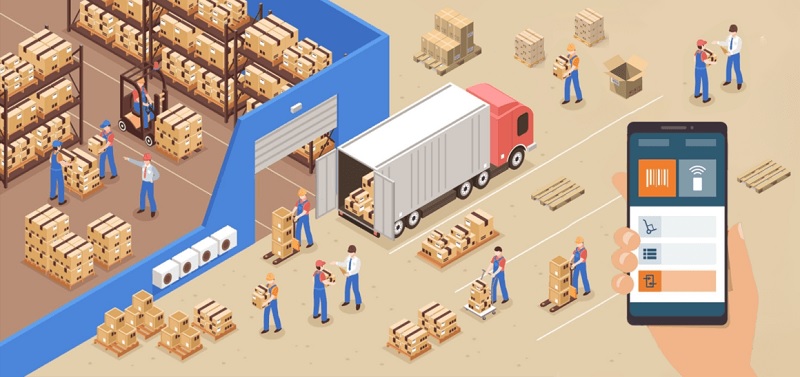
The warehouse is not simply a place to store products but also an important link in the supply chain. An effective warehouse management plan helps businesses control the quantity and quality of goods, reduce losses and optimize operating costs. But how to build a professional warehouse management plan? Below are 5 steps to help automate the process, ensuring smooth and flexible logistics
Step 1: Classify goods
Classifying goods by group, characteristics, life cycle and consumption level helps optimize storage and warehouse management processes. Goods can be divided according to criteria such as: perishable goods, high-value goods, long-term inventory goods or best-selling goods. This helps identify suitable storage locations and ensures goods are managed effectively.
Step 2: Arrange warehouse space
Scientific warehouse arrangement helps save space, reduce search time and optimize the flow of goods. It is necessary to set up separate areas for each type of goods, mark import and export areas, and set up spacious aisles for forklifts or transportation staff. In addition, storage methods such as FIFO (first in - first out) or LIFO (last in - first out) should be applied depending on the type of goods.
Step 3: Apply technology to warehouse management
Application of warehouse management software helps control the accurate quantity of goods, minimize errors in the import - export process and optimize warehouse operations. Some popular technologies such as barcodes, RFID, or WMS warehouse management systems can help businesses track goods in real time and improve management efficiency.
One of the software that supports effective warehouse management is Retail Pro Prism. This is an integrated retail management solution that helps businesses track inventory, automatically update the quantity of goods in real time and optimize the import and export process. Retail Pro Prism also supports synchronization of warehouse data between multiple branches, helping businesses easily control goods and make timely import decisions.
Step 4: Control import and export of goods
Establishing a strict control process from importing, storing to shipping helps avoid loss and data discrepancies and ensures goods quality. It is necessary to have measures to check the quality of goods when warehousing, compare orders with reality, record information clearly and strictly control warehouse receipts and receipts.
Step 5: Forecast and periodically inventory
Forecasting demand for goods based on sales data helps businesses proactively import goods, avoiding shortages or surpluses of goods. Periodic inventory counts help detect errors and make timely adjustments. Monthly inventory reports help businesses have an overall view of inventory, thereby making more accurate decisions.
3. Manage your inventory effectively with Retail Pro Prism
Warehouse management is one of the important factors determining the success of a retail business. An effective warehouse management system not only helps tightly control inventory but also optimizes the import and export process, minimizes loss and improves business performance. Retail Pro Prism is one of the modern warehouse management software, designed to help businesses control inventory accurately, automate important processes and provide in-depth analytical data.

Real-time inventory tracking
One of the biggest challenges in warehouse management is accurately capturing the quantity of goods remaining. Without an effective tracking system, businesses can experience shortages or surpluses of goods, affecting revenue and customer experience. With Retail Pro Prism, all inventory data is updated in real time. The system automatically records all fluctuations in the quantity of goods as soon as there are import-export transactions, helping businesses easily track inventory and quickly detect best-selling products to have timely replenishment plans.
Automate the warehouse import and export process
Traditional warehouse management often requires many manual operations, is prone to errors and is costly in human resources. Retail Pro Prism helps businesses automate the import and export process, minimize data entry errors, and optimize order processing time. When there are goods in stock, the system will automatically update information and adjust inventory quantities immediately. Similarly, when there is a new order, the system will check inventory and support quick and accurate shipment. In addition, Retail Pro Prism also integrates barcode or RFID technology, making inventory easier and minimizing errors during data recording. Thanks to this feature, businesses can improve employee productivity, while reducing the risk of goods loss due to errors in the management process.
Flexible multi-channel management
In the era of omnichannel business, businesses not only sell at traditional stores but also expand to online channels such as websites, e-commerce platforms and social networks. This requires a synchronized warehouse management system that helps control inventory across all channels accurately. Retail Pro Prism allows businesses to synchronize inventory data between all sales channels, helping to closely control the quantity of goods and avoid overselling the actual quantity. At the same time, the system supports flexible coordination of goods between warehouses, ensuring timely supply to each area. Thanks to that, businesses can ensure that goods are always available to serve customers without encountering unexpected out-of-stock situations.
Advanced data analysis, supporting business decisions
Retail Pro Prism not only helps businesses control inventory but also provides powerful data analysis tools. The system is capable of synthesizing and presenting detailed reports on consumption trends of each product, inventory turnover levels as well as business performance in each period. These data help businesses identify which products are selling well and which products have low turnover rates to adjust their import strategies appropriately. In addition, the system also supports future demand forecasting, helping businesses make more accurate business decisions.
Integration with mobile devices, optimizing workflow
A big advantage of Retail Pro Prism is the ability to integrate with mobile devices such as smartphones, tablets and handheld barcode scanners. This brings flexibility in the warehouse management process, allowing employees to check inventory anytime, anywhere without having to return to the office. Employees can also update the quantity of goods directly at the warehouse, making inventory faster and more accurate. Using mobile devices not only saves time but also reduces manual work and ensures data is always updated accurately.
Retail Pro Prism, developed by LBC International, is a comprehensive warehouse management solution that helps businesses optimize operations, control inventory effectively and make business decisions based on accurate data. Applying Retail Pro Prism to the warehouse management process not only helps businesses minimize the risk of goods loss but also brings a better shopping experience to customers, ensuring sustainable development in a competitive business environment.
Let's join LBC International in improving customer management, turning loyalty into a strong growth driver, and conquering the retail market in the most effective way!
- Address: 2nd Floor, 145 Nguyen Co Thach, District 2, Ho Chi Minh City
- Hotline: 028 8888 9099
- Email: info@lbcint.com
Related articles

What is Unified Commerce? Its role in retail store chains
Unified Commerce is a model that integrates all sales channels and business management into a single system.

Experience in choosing an effective retail management solution
Useful experience to help you choose the best solution for your business model.

What is IoT? IoT applications in smart retail
IoT is changing retail through applications such as automated inventory management, contactless payments, and personalized customer experiences.